Why Slowing Down Now Feels Like Falling Behind

“There was a time when slowing down meant rest. Today, it often feels like risk”. Pausing can trigger anxiety. Saying no feels irresponsible. Taking a break feels like losing momentum. In a world that moves relentlessly forward, slowing down is no longer neutral. It feels like falling behind. This is not imagination. It is conditioning. Modern life is built on visible movement. Activity signals relevance. Speed signals ambition. Being busy signals value. When everyone else appears to be advancing, standing still feels like disappearance. The pressure is subtle but constant. Messages arrive instantly. Deadlines compress. Achievements are publicly shared in real time. Progress is no longer private. It is tracked, posted, and compared. In this environment, rest begins to look like absence. Many people are not afraid of slowing down because they dislike rest. They are afraid because speed has become a form of security. Momentum creates the illusion of safety. As long as you are moving, you are not being left behind. As long as you are producing, you still matter. Slowing down forces confrontation with uncertainty. It removes the noise that usually keeps deeper questions at bay. What happens if I stop? Who am I without constant motion? Will I still be relevant? These questions are uncomfortable. So people keep going. Over time, life becomes a series of sprints without recovery. Even rest is optimized. Even leisure becomes productive. The result is exhaustion that no longer responds to time off. What is often missing is not energy. It is permission. Permission to move at a human pace in a system designed for acceleration. Permission to believe that progress is not always visible. Permission to trust that slowing down can sometimes be a form of alignment, not retreat. Slowing down does not mean opting out. It means choosing rhythm over speed. Depth over volume. Direction over constant motion. In an age of acceleration, rest feels rebellious. But it may also be necessary. Not everything that moves fast moves forward. Sometimes, slowing down is how we remember where we were going.
When Work Becomes Identity and Identity Starts to Fracture

At some point, the question stops being what do you do and quietly becomes who are you. For many people, work is no longer just a profession. It is how they introduce themselves, how they measure progress, and how they explain their worth. Titles replace traits. Productivity replaces personality. Achievement becomes identity. At first, this feels empowering. Work offers structure. It provides direction, recognition, and a sense of movement. It gives life a narrative that feels coherent and respectable. But over time, something subtle begins to shift. The boundary between role and self starts to blur. And that is when the fracture begins. When identity is built almost entirely around work, it becomes fragile. A bad quarter feels like a personal failure. A job change feels like a loss of self. Burnout does not just exhaust the body, it confuses the mind. Without work, many are left wondering who they are beneath the performance. This is not because people love work too much. It is because modern systems reward over-identification. In a world that constantly asks us to optimize, scale, and prove value, work becomes the most visible and socially accepted source of meaning. It is easier to say I am busy than I am unsure. Easier to say I am productive than I am searching. Over time, work fills emotional spaces it was never designed to hold. The fracture often shows up quietly. A sense of emptiness after achievements. Anxiety during rest. Guilt when doing nothing. Relationships start to feel secondary. Life outside work becomes thin, almost abstract. Many people mistake this fracture for personal weakness. It is not. It is the result of tying identity to something inherently unstable. Markets shift. Roles change. Skills become obsolete. When identity is anchored only to work, every external disruption becomes an internal crisis. What breaks is not ambition. What breaks is balance. Reclaiming identity does not mean rejecting work. It means refusing to let it define the entire self. It means rediscovering parts of life that do not need to be optimized. Curiosity. Relationships. Stillness. Values that exist even when no one is watching. Work can be meaningful. But it was never meant to carry the full weight of who we are. When identity starts to fracture, it is not a sign that something is wrong with us. It is a signal that something within us is asking for space to breathe. Listening to that signal is not stepping back. It is coming home.
Why So Many People Feel Successful and Empty at the Same Time

On paper, everything looks right. A stable career. Steady income. Recognition. Progress. From the outside, it appears like a life well built. Yet, somewhere between milestones and meetings, a quiet question begins to surface. Why does this not feel like enough? This feeling is more common than most admit. Many people today carry a strange contradiction. They are doing well, yet feel hollow. They are achieving goals, yet feel disconnected from themselves. Success is present, but fulfillment is not. No one warns you that this can happen. We are taught to chase outcomes. Degrees. Promotions. Numbers. Titles. The logic is simple. Achievement brings satisfaction. Progress brings happiness. But somewhere along the way, many realize that external success does not automatically translate into internal meaning. The emptiness does not arrive dramatically. It settles in quietly. It shows up as restlessness on weekends. As a sense of impatience with accomplishments that once mattered deeply. As the feeling that life is moving forward, but something essential is being left behind. One reason for this disconnect is that success today is often measured externally, while meaning is experienced internally. The two do not always move together. Modern success is visible. It can be quantified, compared, shared. Meaning cannot. It is felt in alignment, purpose, and coherence between who you are and how you live. When life becomes a sequence of targets rather than a reflection of values, the gap widens. Another reason is acceleration. Life now moves fast, but reflection moves slowly. People achieve one goal and immediately shift to the next. There is little space to ask whether the path itself still makes sense. Movement replaces meaning. Momentum replaces direction. There is also the silent pressure to appear fulfilled. Admitting emptiness can feel like ingratitude, especially when others are struggling. So people stay quiet. They keep performing success while privately questioning it. What makes this moment different from previous generations is awareness. More people are now willing to name this feeling. They are questioning old definitions of success. They are asking harder questions. What is this all for? Who am I becoming through this life? What feels meaningful beyond achievement? This is not a rejection of ambition. It is a reorientation of it. Meaning does not come from abandoning success. It comes from redefining it. From integrating work with values. From making space for relationships, rest, curiosity, and contribution. From choosing paths that reflect who we are, not just what we are rewarded for. Feeling successful and empty at the same time is not a personal failure. It is a signal. A signal that the old scripts may no longer be enough. A signal that something deeper is asking for attention. A signal that progress without meaning feels incomplete. Listening to that signal is not weakness. It is the beginning of a more honest life. And perhaps, a more human one.
Why Economic Growth Alone No Longer Feels Like Progress
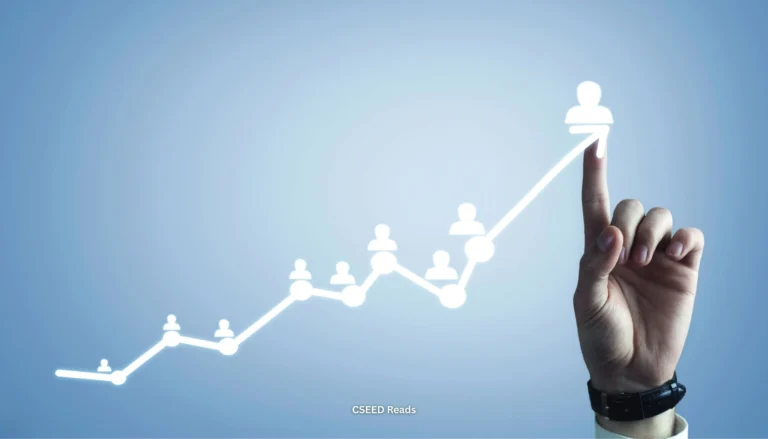
For decades, GDP has been the gold standard of success. Nations competed for higher numbers, companies celebrated rising revenues, and people measured personal achievement in material accumulation. Growth, in theory, was progress. Yet today, something feels off. Higher economic figures do not always translate into better lives, stronger communities, or healthier environments. People are working more hours, mental health challenges are rising, and climate pressures are escalating. Progress, it seems, is slipping through the cracks of raw numbers. “Growth without purpose is like speed without direction. It moves us forward but not necessarily toward a better world.” – Adapted from UN Sustainable Development insights Why GDP and Growth Alone Are Insufficient Economic growth measures production and consumption, but it often overlooks the human and environmental dimensions: Inequality: Gains are rarely evenly distributed. Rising GDP can mask pockets of poverty and disenfranchisement. Environmental degradation: Growth frequently relies on unsustainable extraction and energy use, creating long-term costs not captured in financial metrics. Wellbeing disconnect: Rising incomes do not always correlate with happiness, mental health, or life satisfaction. Short-termism: Focus on quarterly or annual growth can deprioritize innovation, resilience, and long-term societal benefits. According to the OECD Inequality Report, countries with high economic growth still face rising income inequality and social stress, showing that growth is not synonymous with inclusive progress. Redefining Progress Some nations and organizations are experimenting with new metrics: Wellbeing Indexes: Bhutan’s Gross National Happiness and New Zealand’s Wellbeing Budget measure social, environmental, and mental health outcomes. Sustainable Development Goals (SDGs): UN frameworks track multidimensional progress beyond income. Corporate ESG Metrics: Businesses increasingly assess environmental, social, and governance performance alongside profit. These efforts reflect a shift from quantity to quality, from blind growth to growth with purpose. Why This Matters to Individuals and Societies Communities can prioritize local resilience and equity over blind economic expansion. Businesses can innovate for impact, not just profit. Policymakers can measure policies in terms of wellbeing and sustainability, not just GDP growth. Economic growth alone is no longer enough. True progress must consider human experience, social cohesion, and planetary health. Only then can prosperity feel complete, meaningful, and sustainable.
The Invisible Costs of Convenience

We live in a world designed for ease. One-click deliveries, single-use plastics, on-demand streaming, and instant access to information promise efficiency and comfort. Convenience has become the currency of modern life. But every shortcut comes with hidden consequences, costs that rarely appear on receipts or screen notifications. These are the invisible costs of convenience. “Every effortless choice carries an unseen weight. The more we demand instant, the more the planet, and often society, pays.” – Adapted from environmental economics research The Hidden Impacts Convenience often masks complexity. Consider these everyday examples: Fast Fashion: Cheap, trendy clothing provides immediate satisfaction but drives textile waste, water depletion, and labor exploitation. Single-Use Plastics: Bottled water and disposable cutlery simplify our routines while polluting oceans and burdening waste systems. Digital Overconsumption: Streaming and cloud storage seem harmless but contribute to rising energy use and carbon emissions. Gig Economy Deliveries: Immediate access to meals and goods comes with environmental and social costs, including emissions and precarious labor conditions. According to the UNEP Annual Report 2022, consumer convenience drives significant environmental footprints, from resource extraction to waste generation. The true price is rarely visible at checkout. Why We Overlook the Costs Invisible Supply Chains: Most consumers never see the extraction, production, or disposal stages. Delayed Consequences: Climate impacts, ecosystem degradation, and social inequalities unfold slowly, making them easy to ignore. Cultural Norms: Instant gratification is celebrated, and efficiency is equated with success. Research from McKinsey & Company shows that less than 20% of consumers consider long-term environmental impact when purchasing convenience-focused products, even as awareness grows. Turning Awareness into Action Mindful Consumption: Pause before choosing convenience; consider alternatives. Invest in Durability: Long-lasting products reduce repeated resource use. Support Sustainable Services: Choose companies that integrate sustainability into operations. Advocate for Systemic Change: Convenience-driven models thrive because they are easy and profitable; policy and corporate accountability can shift incentives. Convenience is seductive, but its hidden costs are real. The challenge is not to reject efficiency but to reconcile it with responsibility. Only by seeing what we usually ignore can we make choices that serve both people and the planet.
Environmental Anxiety Explained: The Quiet Fear of a Warming World
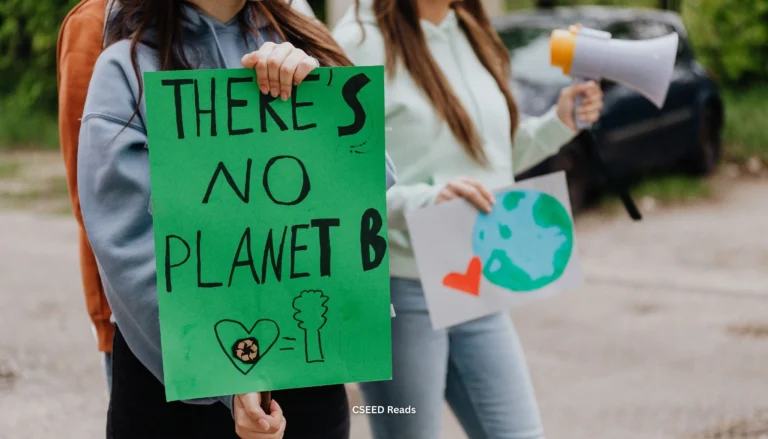
Have you ever felt a knot in your stomach while reading about floods, wildfires, or melting ice caps? Or maybe a creeping unease when the weather behaves unpredictably, or when you scroll through alarming climate news? You are not alone. This emerging emotion has a name: environmental anxiety. It is the quiet fear, the persistent worry, and sometimes the guilt we feel as we confront the reality of a warming world. Unlike panic or acute stress, environmental anxiety is subtle—it grows as we absorb information about our planet’s fragility and our own limited control. “Environmental anxiety reflects awareness. It’s the mind’s response to a world changing faster than our capacity to adapt.” – Adapted from APA research on climate anxiety Why Environmental Anxiety Is Rising Several global and social trends explain why this feeling is now common: Constant exposure to climate news: Social media, news outlets, and documentaries bring extreme weather and ecological collapse into daily life. Direct experience with environmental changes: Heatwaves, floods, droughts, and storms are no longer abstract events, they affect families, communities, and workplaces. Generational awareness: Younger generations are growing up knowing that climate change is urgent, which amplifies their perception of risk. Perceived lack of control: Global problems can feel overwhelming, making individuals anxious even when they act responsibly in their personal lives. According to the American Psychological Association, nearly two-thirds of U.S. adults report feeling at least somewhat anxious about climate change, and the levels are highest among young adults. How It Manifests in Daily Life Environmental anxiety can appear in unexpected ways: Reluctance to travel or consume goods with a high carbon footprint Stress or guilt about lifestyle choices, even minor ones Seeking constant updates on climate science or policy Concern for the future of children and communities Yet, this anxiety is not purely negative. When acknowledged and channeled, it can motivate action, inspire sustainable habits, and foster community engagement. Practical Lessons from This Quiet Fear Acknowledge your feelings: Recognizing anxiety is the first step toward resilience. Stay informed but selectively: Limit exposure to alarming content and focus on solutions-oriented news. Engage in community action: Volunteering or participating in sustainability initiatives transforms worry into meaningful effort. Develop personal resilience: Mindfulness, reflection, and supportive networks help cope with persistent uncertainty. Environmental anxiety is a shared societal experience, not a personal failing. Understanding it helps people normalize conversations, support each other, and transform concern into action. The quiet fear of a warming world is here. And acknowledging it is the first step toward building resilience for ourselves, our communities, and the planet.
Resilience Is Becoming the World’s Most Valuable Skill
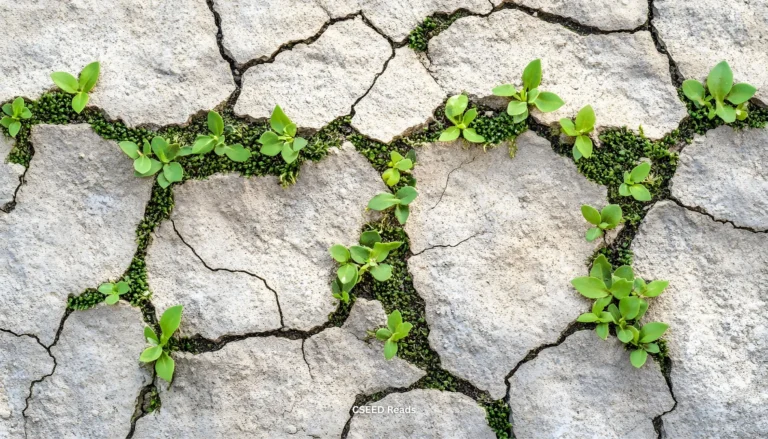
The world no longer rewards only speed, knowledge, or connections. It rewards endurance. Adaptability. The quiet ability to recover when everything shifts around you. Resilience is becoming the most valuable skill, not because challenges are new, but because their pace and unpredictability are accelerating. “It’s not the strongest or the most intelligent who survive, but those most responsive to change.” – Charles Darwin Across economies, societies, and organizations, disruptions are constant: pandemics, climate shocks, technological upheaval, social unrest. Those who anticipate these changes can adapt. Those who cannot often fall behind even if they were previously leaders. Consider the story of a small business navigating the pandemic: Sales channels collapsed overnight Supply chains broke Staff became unavailable due to illness or lockdowns Those businesses that survived did not do so because they had perfect plans. They survived because they pivoted quickly, experimented constantly, and absorbed setbacks without losing vision. Research from the World Economic Forum highlights that resilience, emotional intelligence, and adaptability are now among the top skills employers value globally. This is a shift from purely technical or academic skills. On a societal level, resilience shapes stability. Communities that recover quickly from natural disasters or economic shocks maintain trust, cohesion, and growth. Countries investing in social safety nets, mental health, and flexible infrastructures emerge stronger after crises. According to the OECD, nations that integrate resilience into education, health, and governance are more likely to maintain productivity and innovation during shocks. Why is resilience so undervalued in traditional thinking? Because it is invisible until tested. A robust supply chain, a supportive social system, or a team that recovers from failure quietly goes unnoticed—until it’s absent. Then, the cost is immediate and undeniable. The practical lessons for individuals and organizations are clear: Build redundancy: Have alternative plans, networks, and skills Practice adaptability: Be ready to change approaches without losing focus Develop emotional endurance: Learn to manage stress, uncertainty, and disappointment Invest in learning: Continuous improvement strengthens long-term resilience Foster supportive communities: Social and professional networks buffer shocks In a world of accelerating change, resilience is no longer optional. It is the skill that allows people, businesses, and societies to survive, grow, and thrive when uncertainty is the only certainty.
The Role of AI in Global Security and Strategic Planning

Artificial Intelligence (AI) is no longer a distant concept, it is rapidly becoming a central tool in global security and strategic planning. Beyond the headlines of autonomous weapons or futuristic technologies, the real influence of AI lies in its ability to analyze, anticipate, and inform critical decisions that shape nations and organizations. Enhancing Strategic Decision-Making AI can process vast amounts of information from satellite imagery and intelligence reports to economic trends and social signals far faster than any human team. This allows strategic planners to detect emerging risks, model complex scenarios, and allocate resources efficiently. In essence, AI acts as a force multiplier for human judgment, enabling decision-makers to anticipate challenges before they become crises. For example, AI-driven analytics can highlight patterns in global trade disruptions, flag potential security threats, or even simulate the consequences of diplomatic moves. By offering these insights, AI supports leaders in making informed choices in an increasingly interconnected and unpredictable world. Shaping Global Security AI is influencing security not just through data analysis, but also through autonomous systems, cybersecurity, and predictive modeling. Nations are exploring how AI can enhance defense capabilities, from early-warning systems to cyber defense tools. At the same time, AI is helping organizations understand vulnerabilities, anticipate conflicts, and maintain resilience in the face of evolving threats. However, these technologies are not without risk. Over-reliance on AI can introduce bias, errors, or unintended escalation if human oversight is lacking. Ethical considerations, transparency, and accountability must remain central to ensure AI enhances rather than undermines strategic stability. Beyond Defense: AI in Strategy and Policy AI’s influence extends beyond military applications. Governments and corporations increasingly use AI to forecast economic shifts, guide diplomacy, and optimize resource distribution. Scenario planning powered by AI allows leaders to test policies before implementation, anticipate ripple effects, and make proactive decisions that strengthen resilience. By combining human judgment with AI’s analytical power, organizations can navigate complexity, reduce uncertainty, and pursue sustainable long-term strategies. Those who master this integration are likely to shape not only national security outcomes but also the broader landscape of global power. The Future of Strategic Planning AI is transforming strategic planning from a reactive practice to a proactive, intelligence-driven process. While machines provide speed and scale, humans remain essential for context, ethics, and judgment. The most successful strategies will emerge from collaboration between human insight and artificial intelligence, ensuring that decisions are both informed and responsible. In a world of accelerating technological change and shifting global dynamics, AI is no longer optional, it is a strategic partner. Understanding its potential, limitations, and ethical implications is essential for anyone looking to navigate the complex challenges of the 21st century.
Who Wins and Loses in an AI-Driven World

Artificial intelligence does not affect everyone equally. It never has, and it never will. While some people experience AI as opportunity, efficiency, and growth, others encounter it as displacement, uncertainty, and loss of control. The difference is not intelligence or effort. It is position. In an AI-driven world, outcomes depend on where you stand when change accelerates. Those who win early often do not notice the shift happening beneath them. For them, AI feels like leverage. They are typically: Workers whose skills complement AI rather than compete with it Companies that control data, platforms, or distribution Countries with digital infrastructure, capital, and talent pipelines Individuals who can adapt quickly because they have safety nets According to research by McKinsey, generative AI could add trillions of dollars annually to the global economy, largely benefiting advanced economies and high-skill sectors. For these groups, AI amplifies advantage. Those who lose often do not lose overnight. They erode slowly. They include: Workers in routine or semi-routine jobs vulnerable to automation Small businesses without access to AI tools or data Regions where digital infrastructure remains weak Young people trained for jobs that may not exist in the same form The OECD Employment Outlook shows that AI-driven automation disproportionately affects lower-income and lower-skilled workers, increasing wage polarization if no interventions follow. For these groups, AI feels like instability. There is also a quieter divide that rarely gets discussed. Those who understand how AI systems work gain influence. Those who do not must trust decisions they cannot see or challenge. This creates a knowledge gap that is not just technical, but democratic. Research from Pew Research Center shows that while awareness of AI is rising, understanding remains limited. This gap shapes who can question systems and who must accept them. Power follows comprehension. Importantly, this is not a fixed outcome. AI does not decide winners and losers on its own. Policy choices, education systems, corporate responsibility, and public awareness all shape how benefits and risks are distributed. The World Bank emphasizes that digital skills, inclusive access, and institutional readiness can significantly reduce inequality in technology-driven transitions. The future is still contested. The real risk is not that AI creates inequality. The real risk is that societies normalize it. If AI becomes a force that rewards a few while marginalizing many, trust erodes. Social cohesion weakens. Resistance grows. History shows that such imbalances rarely remain stable for long. An AI-driven world will not be judged by how advanced its technology becomes. It will be judged by who benefits, who bears the cost, and whether societies choose to intervene before divides harden into destiny. That is the question shaping the decade ahead.
The AI Race Is Not About Technology. It Is About Influence

The global conversation around artificial intelligence often sounds technical. Faster models. Bigger datasets. More powerful chips. But beneath the surface, the AI race is not really about technology. It is about who shapes decisions, narratives, and norms in a world increasingly guided by algorithms. “Power today is exercised less through force and more through influence over systems people depend on”. That is where AI quietly enters. Artificial intelligence does not just automate tasks. It shapes how information flows, how choices are framed, and how reality is interpreted at scale. Recommendation systems decide what billions of people see. Predictive tools influence hiring, lending, policing, and healthcare. Language models increasingly mediate how humans interact with knowledge itself. According to Brookings Institution research on AI governance, the actors that control AI standards and deployment frameworks gain disproportionate influence over economic and social outcomes. This influence extends far beyond traditional political authority. What makes this shift different is speed. Political power usually moves through institutions. AI-driven influence moves through platforms. It updates continuously. It adapts instantly. And it scales globally without elections or treaties. The Oxford Martin School highlights that AI governance gaps allow private systems to shape public life faster than regulatory responses can follow. Influence accumulates quietly, embedded in everyday tools. The AI race therefore plays out across several layers at once: Who sets technical standards that others must adopt Who controls data flows that train future systems Who defines ethical boundaries that become global defaults Who earns public trust to deploy AI at scale Each of these decisions influences societies long after the technology itself evolves. This is why the race is not simply between countries. It is also between models of influence. Some systems prioritize transparency and human oversight. Others emphasize efficiency and control. Over time, these choices shape behavior, expectations, and even values. Research by RAND Corporation shows that AI-driven influence operations already affect public opinion, political discourse, and social cohesion. Influence no longer requires persuasion alone. It requires infrastructure. The human dimension matters here. When people rely on AI systems they do not understand, influence becomes invisible. Trust shifts from institutions to interfaces. Authority moves from leaders to systems that appear neutral but reflect underlying priorities. This is why the future of AI is inseparable from the future of human agency. The real question, then, is not who builds the most advanced AI. It is who earns the legitimacy to guide how AI shapes daily life. Technology will continue to evolve. Influence, once established, is far harder to reverse. And that is where the true race is unfolding.